
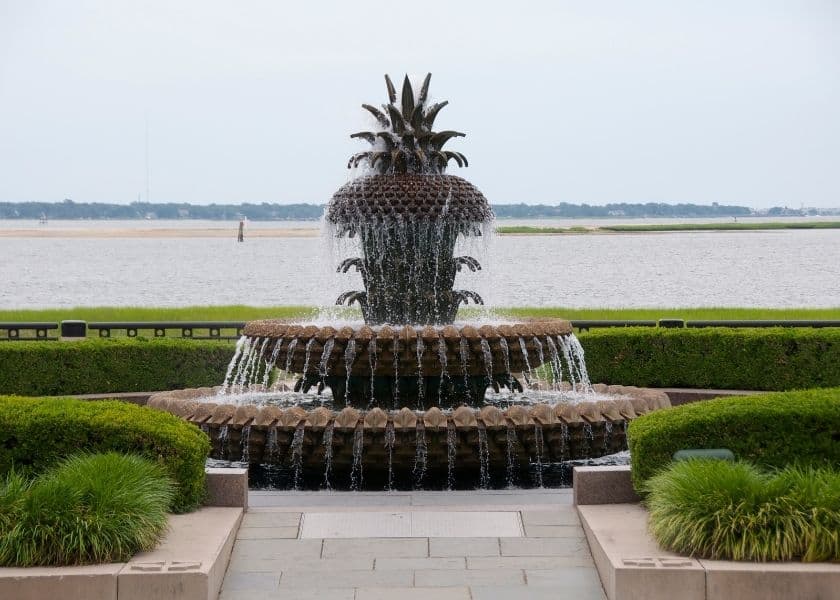
The tradition of pineapples being recognized as a familiar symbol of welcome and hospitality traces all the way back to early American colonial times. Hostesses were known to famously place a fresh pineapple at the center of a dinner table or a portent of sumptuous hospitality but also as a signal of high status.

In the 17th and 18th centuries, imported pineapples often rotted during the slow, perilous sea voyages. An unblemished pineapple became the ultimate status symbol, sometimes costing the modern equivalent of thousands of dollars. The rare appearance of the pineapple in colonial America made it a sought-after delicacy. Guests were naturally flattered at the honor and thus may have led to the notion that the pineapple was a sign of the highest form of hospitality. As a side note, since 1681 the pineapple has been recognized as a Christian symbol in that each pineapple plant sacrifices its own life to produce a single fruit.

In time, the pineapple began being featured in architectural details throughout the colonies. It was featured as the center in broken- scroll pediments and as pinnacles of pyramidal rooves. Shirley Plantation in Charles City County, Virginia was begun in 1725 and features many architectural pineapple components. The main structure has a geometric pineapple at the apex of its roof with two inside doorways featuring pineapple woodwork dating from 1771. Over the bedroom door leading to the entry hall is a high-relief pineapple set inside a split pediment. And over the parlor door, is a pineapple between the volutes of a broken scroll. On the dining room mantle rests a silver tea caddy made in London in 1787. Its finial is an ivory pineapple with a little silver crown on top.